
Quality Control and Batch Traceability in Custom Molding
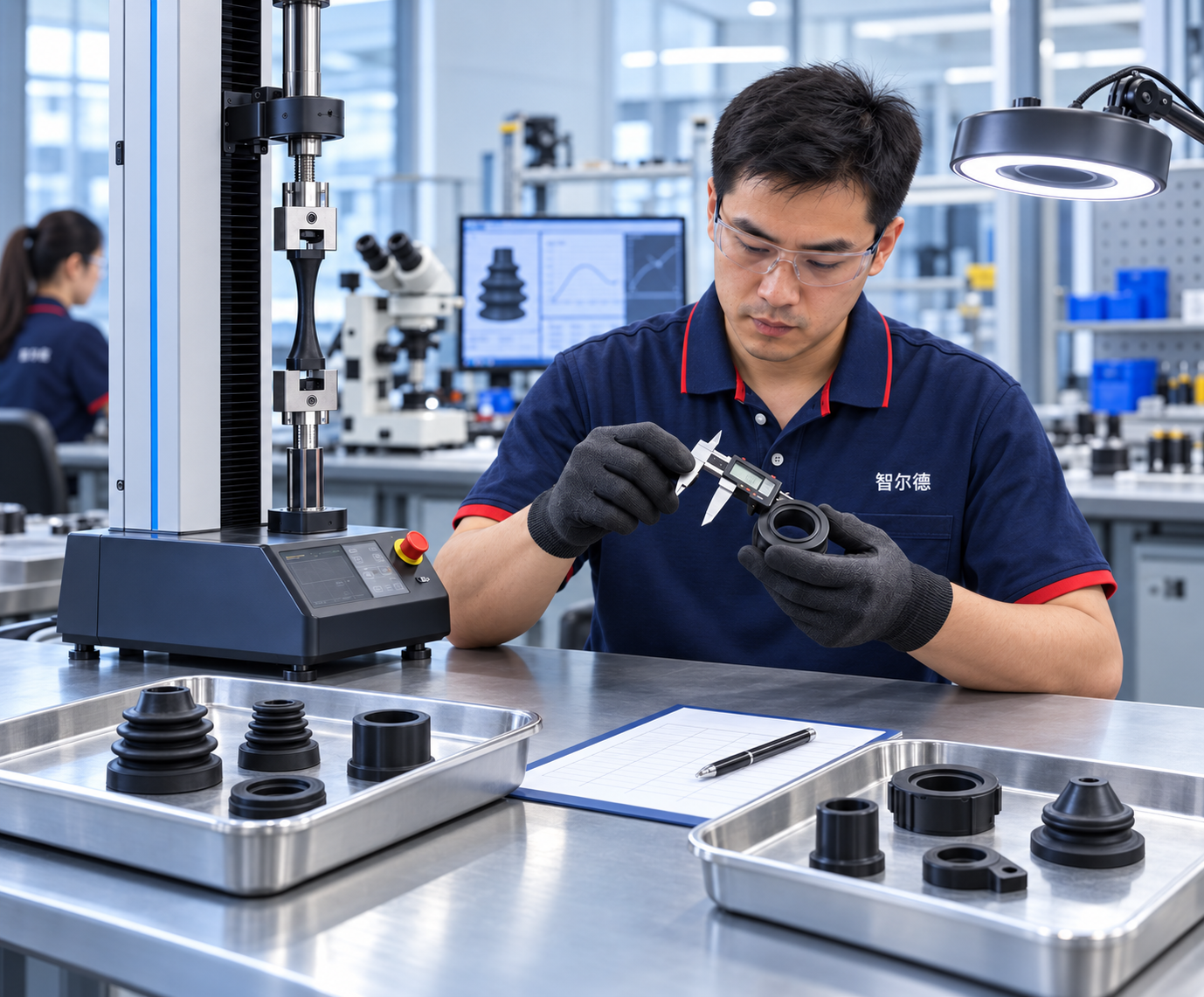
Meta title: Quality Control and Batch Traceability in Custom Molding | ZED
Meta description: Learn how incoming material checks, in-process inspection, final inspection and batch records support repeatable custom rubber and plastic production.
Excerpt: Final inspection alone cannot create consistent quality. Reliable molding connects material identity, process control, inspection results and shipment records.
Quality must be controlled throughout production
A finished molded part reflects many earlier decisions: material formulation, storage, mold condition, process settings, operator method, inspection and packaging.
If quality is checked only after production is complete, the team may detect defects but cannot always identify when or why they occurred. Effective quality control begins before molding and continues through shipment.
The objective is not to create more paperwork. It is to maintain evidence that the correct material, process and inspection standard were used for each production batch.
1. Define critical characteristics before production
Not every dimension or visual detail has the same importance. The project team should identify the characteristics that affect function, safety, assembly or customer use.
Critical characteristics may include:
Material identity and hardness
Key dimensions and fit
Part weight
Sealing or assembly surfaces
Bonding between materials
Color or appearance
Functional movement
Product-specific performance checks
The drawing, approved sample and inspection plan should communicate these priorities clearly.
2. Control incoming materials
Incoming inspection verifies that the delivered material matches the approved requirement before it enters production.
Depending on the material and project, checks may include:
Supplier and material identification
Lot or batch number
Packaging condition
Color or appearance
Certificate or supporting document review
Storage condition
Moisture condition for sensitive thermoplastics
Basic material tests where required
Incoming inspection does not replace supplier control or finished-product testing. It is one layer of the production system.
3. Maintain material preparation records
Material preparation can affect the molded result.
For compounded rubber, records may connect raw-material inspection, formula weighing, mixing, sheet preparation, resting and batch identification. For thermoplastics, drying time, drying temperature, material handling and permitted regrind conditions may need to be controlled.
The objective is to prevent an unidentified or improperly prepared material from reaching the molding process.
4. Use first-piece approval
At the start of a production run, the first molded parts should be checked before the full batch continues.
First-piece inspection may review:
Correct material and color
Part weight
Critical dimensions
Surface and flash condition
Gate or trimming condition
Assembly or functional check
Packaging configuration
If the first piece does not meet the requirement, production should be adjusted before a large quantity is made.
5. Monitor the process, not only the product
Inspection can confirm whether a part is acceptable, but process records help explain why it is acceptable.
Important conditions may include:
Machine and mold identification
Temperature
Pressure
Cure, injection or cooling time
Material preparation status
Cavity or station
Operator and production time
The exact parameters depend on the process. The control plan should focus on conditions that influence critical product characteristics.
6. Conduct in-process inspection
Production conditions can change during a long run because of material variation, temperature, mold condition or equipment behavior. In-process inspection provides checkpoints between first-piece approval and final inspection.
Inspection frequency should reflect product risk, production volume, process stability and customer requirements.
Typical checks include:
Dimensions
Weight
Appearance
Hardness
Bond or interface condition
Assembly or function
Results should be connected to the relevant time, batch, machine or cavity when practical.
7. Confirm final product and packaging
Final inspection confirms that the completed batch meets the release requirements. It should also verify packaging because incorrect labeling, quantity or protection can create customer problems even when the molded part is correct.
Final checks may cover:
Product identity and revision
Quantity
Critical inspection results
Appearance and workmanship
Functional sampling
Labels and carton marks
Packaging method
Shipment documentation
8. Build practical batch traceability
Traceability should allow the team to connect a finished shipment with relevant production information.
A practical batch record may include:
Customer part number and revision
Production order
Material lot or rubber compound batch
Mold and machine identification
Production date and shift
Inspection results
Packaging date
Shipment reference
The correct level of traceability depends on product risk and customer requirements. More data is not automatically better if it cannot be maintained accurately.
9. Use retained samples where appropriate
Retained samples can help compare future batches, investigate complaints and confirm appearance or material behavior. The retention quantity and period should be defined according to project needs.
Samples should be identified clearly so that they can be connected to the correct batch.
10. Respond to nonconforming product with evidence
When a problem occurs, traceability reduces guesswork. The team can review the material lot, inspection history, process records and retained samples to identify the likely cause and affected scope.
Corrective action should address the root cause rather than only sorting defective parts. Depending on the issue, action may involve material handling, tool maintenance, process conditions, inspection method, work instructions or packaging.
Quality is the connection between material, process and evidence
Reliable custom molding requires more than final inspection. It requires a controlled chain from incoming material to production release and shipment.
ZED connects material preparation, molding, inspection, packaging and batch records so that approved requirements can be repeated across production orders.


